
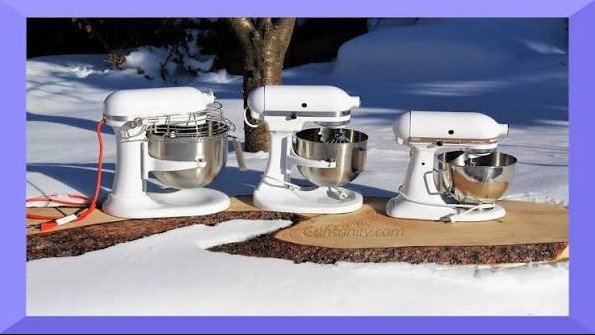
Choosing the right size KitchenAid mixer depends on how much you bake and your available kitchen storage. Whether you are a casual cookie maker or a professional-style bread enthusiast, finding the perfect capacity ensures efficiency and better results in your daily kitchen projects.
Walking into an appliance store or browsing online in 2026 can feel overwhelming when you are staring at a sea of shiny KitchenAid mixers. You might find yourself asking, what size KitchenAid mixer do I need? It is a common dilemma. You want something powerful enough to handle your weekend sourdough project but small enough that it does not take over your entire kitchen counter.
The truth is, there is no single answer that fits every baker. Your perfect mixer depends on your lifestyle, the frequency of your baking, and the types of recipes you love to tackle. In this guide, we will break down everything you need to know to make an informed decision that will serve you well for years to come.
Key Takeaways
- Assess Your Batch Size: Determine if you typically make standard batches or double recipes for crowds.
- Storage Limitations: Measure your counter height and cabinet space before committing to a larger model.
- Motor Power Matters: Smaller mixers are great for light tasks, while larger bowl-lift models handle dense bread doughs better.
- Bowl-Lift vs. Tilt-Head: Understand that bowl-lift models are generally more stable for heavy-duty work.
- Consider Attachments: Ensure the size you choose is compatible with the attachments you plan to use, like pasta rollers or grinders.
- Future-Proof Your Purchase: Buy for the baker you want to become, not just for what you bake today.
Understanding the Tilt-Head vs. Bowl-Lift Design
Before you even look at the quart capacity, you need to decide on the mechanical design. KitchenAid offers two primary styles: the tilt-head and the bowl-lift. Each serves a different purpose and fits into a different type of kitchen workflow.
The Tilt-Head Model
The tilt-head mixer is the classic choice for home bakers. With this design, the head of the mixer tilts back, allowing you to easily remove the bowl or scrape down the sides. It is user-friendly and perfect for the casual baker who makes cookies, cakes, and brownies on the weekends. These models typically come in 3.5 to 5-quart sizes, making them compact and easy to store.
The Bowl-Lift Model
If you find yourself baking heavy breads or large quantities of dough, the bowl-lift design is your best friend. In these models, the head stays fixed in place, and you use a lever to lift the bowl up to the beaters. This provides superior stability, especially when you are mixing thick, heavy ingredients. You will usually find these in 5-quart to 7-quart sizes and beyond, offering more power for those more challenging recipes.
Selecting the Capacity for Your Baking Style
When you ask what size KitchenAid mixer do I need, you really have to look at the math. A 3.5-quart mixer is fantastic for small, single batches. If you are just a hobbyist baking for two, a smaller machine is perfect. It is lightweight, fits under standard cabinets, and is very easy to move around.
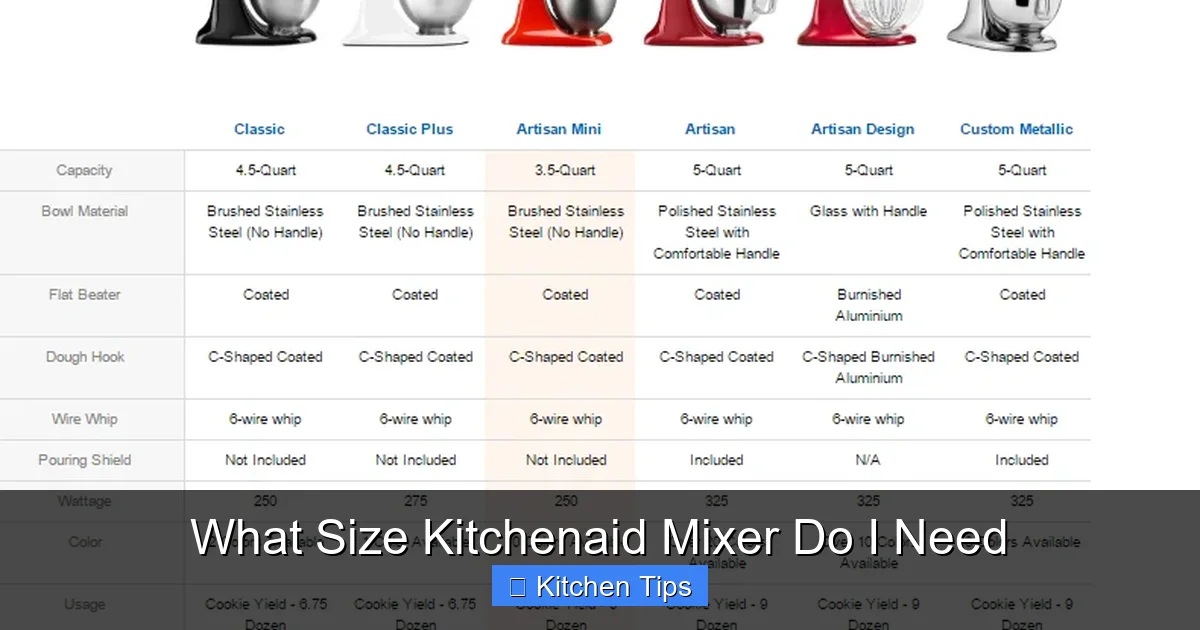
Visual guide about What Size Kitchenaid Mixer Do I Need
Image source: i0.wp.com
However, if you have a family or love to host holiday parties, you should consider the 5-quart or 6-quart options. These provide the volume needed for double batches of cookies or large batches of bread dough. Remember, if a mixer is too full, you risk straining the motor or ending up with ingredients flying out of the bowl. Always leave a bit of breathing room for your ingredients to mix properly.
The Power Factor and Motor Strength
Motor size and mixer size often go hand in hand. A larger bowl usually implies a more robust motor capable of tackling heavier loads. If you are primarily interested in mixing delicate batters or whipping cream, the smaller motors in the entry-level models will perform admirably. They are efficient and quiet for these light tasks.
For those who are serious about artisan bread, motor torque is critical. You want a motor that does not get hot or struggle when it hits a thick mass of flour and water. Investing in a larger bowl-lift model often secures a motor built for endurance. By choosing the right size, you ensure that the machine is not overworking, which significantly extends the lifespan of your appliance.
Countertop Real Estate and Storage Space
One of the most practical factors in the what size KitchenAid mixer do I need debate is physical space. Many people buy a massive 7-quart mixer, only to realize it is too tall to fit under their upper cabinets. Before you buy, take a tape measure to your kitchen.
Check the height of your counter to your cabinets. Many tilt-head models are shorter, making them ideal for kitchens with limited clearance. If you have plenty of room, a bowl-lift model can sit out proudly on your counter. If you have to store the mixer in a pantry or cabinet, consider the weight as well. A heavy bowl-lift model is hard to move frequently, whereas a smaller tilt-head model is much easier to slide in and out of storage.
Thinking About Attachments and Versatility
Your mixer is more than just a bowl and a whisk. KitchenAid is famous for its attachment hub. When you think about what size KitchenAid mixer do I need, consider whether you plan to use the pasta roller, the meat grinder, or the vegetable slicer. Most attachments work across the different sizes, but the stability of the bowl-lift models makes them better suited for tasks like grinding meat.
If you want to turn your mixer into a multipurpose kitchen hub, ensure the base you choose is heavy enough to remain stable while using these tools. A shaky mixer can be frustrating when you are trying to roll out pasta or shred large amounts of cheese. A slightly larger, heavier base usually offers a better user experience for these additional chores.
Budgeting for Your Long-Term Needs
Finally, let’s talk about value. A smaller mixer is a lower investment, but it might limit your growth as a baker. If you think you might want to learn professional techniques or increase your output in the future, it is often worth the extra cost to jump up one size. Buying the right size the first time saves you from having to upgrade in a couple of years.
Look for sales and refurbished options if you have your eye on a premium large-capacity model. By focusing on your specific needs—how often you bake and what you bake—you can find a balance that fits your budget perfectly. The goal is to own a tool that makes baking easier and more enjoyable, not one that sits in the box because it was too large or too weak for your needs.
Ultimately, the best mixer is the one that gets used. If you enjoy your machine, you will bake more. Take your time, measure your space, and be honest about your baking habits. You will find the perfect companion for your kitchen.
Frequently Asked Questions
Can I use a 5-quart mixer for everything?
Yes, a 5-quart mixer is considered the “gold standard” for home bakers. It is versatile enough to handle small batches of cookies and large enough to tackle most standard cake and bread recipes.
Do I need a bowl-lift model for bread?
While you can make bread in a tilt-head, the bowl-lift model is superior for thick, heavy doughs. Its structural design provides more stability, preventing the mixer from “walking” across your counter.
Is a larger mixer always better?
Not necessarily. If you mostly bake for one or two people, a smaller model is more efficient, easier to clean, and takes up less space. A very large mixer might be overkill for small batches.
Does the size affect the attachments I can use?
Most modern KitchenAid attachments are universal and fit the hub of almost every mixer model. However, you should always check compatibility for very old or specialty models before purchasing.
Will my mixer fit under my kitchen cabinets?
Standard KitchenAid mixers range in height, and many do not fit under low-hanging cabinets when the head is tilted. Always measure the vertical clearance between your counter and upper cabinets before choosing your size.
How do I know if I have the right size motor?
If you find your mixer getting very hot or smelling like ozone during use, you are likely overloading the motor. If you bake heavy doughs regularly, upgrading to a model with a higher wattage motor is recommended.