
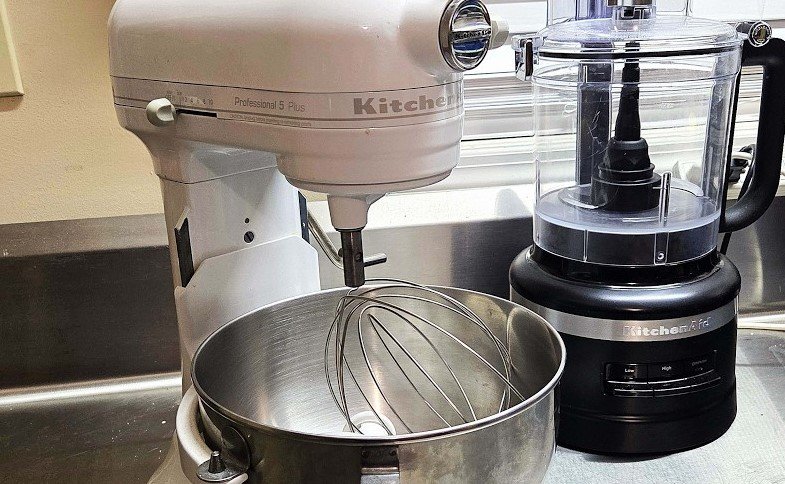
KitchenAid stand mixers remain the gold standard for home bakers due to their unmatched build quality and longevity. By investing in high-grade materials and a modular design, these machines are built to last decades, effectively making them a cost-effective appliance over time.
Walking into a kitchen and seeing a gleaming, colorful KitchenAid stand mixer sitting on the counter is like spotting a piece of functional art. For many home cooks, it is the ultimate status symbol—a sign that you take your baking seriously. However, when you look at the price tag, you might pause. You might find yourself asking: why is KitchenAid mixer so expensive? In an age where you can buy a hand mixer for the price of a takeout meal, the four-to-six-hundred-dollar price point for a stand mixer can feel like a massive investment.
It is easy to assume you are just paying for the brand name, but that is only a tiny fraction of the story. Since 1919, KitchenAid has dominated the market because they refuse to cut corners. As we move through 2026, the cost of manufacturing, quality steel, and skilled labor has only gone up, yet the demand for these machines has remained at an all-time high. Let us pull back the curtain on why this machine earns its place on your counter and why that price tag is actually a smart long-term financial move.
Key Takeaways
- Industrial-Grade Engineering: The use of all-metal gears and heavy-duty die-cast zinc housing provides unmatched stability.
- Longevity and Repairability: Unlike disposable modern appliances, KitchenAid mixers are designed to be serviced and repaired, lasting for generations.
- Versatile Ecosystem: The power hub allows the machine to function as a multifunctional kitchen system, not just a mixer.
- Made in America: Most models are still manufactured in Greenville, Ohio, reflecting higher labor and quality control standards.
- Brand Heritage and Resale Value: The iconic design holds its market value exceptionally well, ensuring that a KitchenAid mixer is always a liquid asset.
The Anatomy of Quality: Materials and Construction
The primary reason why is KitchenAid mixer so expensive boils down to what is inside the shell. If you pick up a cheap knock-off mixer, you will notice it is light, plastic, and tends to “walk” across the counter when kneading thick bread dough. KitchenAid mixers are the opposite. They are heavy, solid, and incredibly stable.
The All-Metal Gear Train
Most inexpensive mixers use plastic gears to transfer power from the motor to the attachments. Plastic is cheap to manufacture, but it is also prone to stripping and melting under high pressure. KitchenAid, by contrast, uses precision-machined, all-metal gears. This ensures that when you are whipping up a triple-batch of holiday cookie dough, the motor can exert maximum force without the gear teeth snapping off. This level of engineering requires expensive tooling and high-quality alloys that simply cost more to source.
Die-Cast Zinc Housing
Have you ever noticed how sturdy a KitchenAid feels? That is because the exterior housing is typically made of die-cast zinc, not lightweight plastic. This heavy base acts as a stabilizer. When you are mixing something thick, you want that weight to keep the machine grounded. Zinc is a premium material that is corrosion-resistant and incredibly durable, ensuring your machine looks as good in twenty years as it does on day one.
The Power of the Power Hub
One of the most compelling reasons why is KitchenAid mixer so expensive is its versatility. You are not just buying a mixer; you are buying a powerhouse platform. The power hub located at the front of every KitchenAid mixer is a genius piece of design that has remained consistent for decades.
The Ecosystem Approach
You can turn your stand mixer into a pasta maker, a meat grinder, a vegetable spiralizer, or even an ice cream maker. Because the motor is designed with enough torque to handle these varied tasks, it replaces a whole cabinet full of smaller, single-use appliances. When you calculate the cost of buying a high-end pasta roller, a dedicated food processor, and a separate meat grinder, the KitchenAid actually starts to look like a bargain. You are paying for a single motor that can conquer almost any kitchen task.
Manufacturing Excellence in Ohio
In a world where most appliances are outsourced to the cheapest possible facilities, KitchenAid maintains a significant portion of its production in Greenville, Ohio. This commitment to domestic manufacturing is a major factor in why is KitchenAid mixer so expensive.
Quality Control and Labor Costs
Keeping a factory in the United States means following strict labor laws, paying fair wages, and maintaining rigorous quality control standards. Each mixer is assembled with care, and because the workers are highly trained, the defect rate is incredibly low. When you purchase a machine made in Ohio, you are supporting a legacy of American craftsmanship. You are paying for a product that hasn’t been rushed through an assembly line in a factory where the priority is solely the lowest possible production cost.
The Sustainability of Longevity
We live in a “throwaway” culture. Most small kitchen appliances are designed with a lifespan of three to five years. Once they break, they usually end up in a landfill because they are glued together or the parts are no longer manufactured. KitchenAid takes a different approach, which is why is KitchenAid mixer so expensive—it is built to outlast you.
The Repairability Factor
A KitchenAid mixer is essentially a modular machine. Every bolt, every gear, and every internal component is designed to be accessible. If a motor fails ten years down the road, you do not throw the whole unit away; you simply replace the motor. There are countless hobbyists and professional shops dedicated to refurbishing these machines. When you consider that a KitchenAid can last thirty or forty years with minor maintenance, the initial high cost becomes a negligible expense when spread over four decades of use.
The Value of Brand Equity and Resale
While the internal components justify the manufacturing cost, we cannot ignore the brand equity. KitchenAid has spent over a century building a reputation for excellence. When you buy a KitchenAid, you are buying into a history of baking heritage. This brand strength translates to incredible resale value.
The Secondhand Market
If you ever decide to upgrade your model or move to a smaller kitchen, your KitchenAid will still be worth a significant portion of what you paid for it. Look at any online marketplace; even used, dented, or dusty KitchenAid mixers hold their value because buyers know they can easily be cleaned and serviced to run like new. Unlike a plastic mixer, which has zero resale value, your KitchenAid is a semi-liquid asset. This makes the “true cost” of ownership much lower than the initial sticker price suggests.
Tips for Getting the Most Out of Your Investment
Once you decide to make the investment, you want to ensure your machine stays in peak condition. The durability of these mixers is legendary, but a little bit of care goes a long way. Here are a few expert tips for 2026 owners.
First, always start your mixer on the lowest speed and gradually increase it. This prevents the motor from experiencing unnecessary stress during start-up. Second, never overfill the bowl. While the machine is powerful, forcing it to work beyond its capacity can cause the gear grease to overheat. Finally, keep your attachments clean and dry. Hand-washing your beaters even if they say dishwasher safe will help the finish last much longer.
Conclusion
When you ask, “why is KitchenAid mixer so expensive,” the answer is a combination of heavy-duty engineering, ethical manufacturing, and a commitment to longevity. It is a machine that rejects the modern trend of disposable goods. It is meant to be a permanent resident of your kitchen, passed down through generations, and used to create thousands of meals.
While the upfront price is certainly a hurdle, the value proposition is undeniable. You are trading a lower price today for a lifetime of performance. In 2026, when convenience often sacrifices quality, the KitchenAid stand mixer remains a defiant, brilliant example of how things should be made. When you bake that first loaf of sourdough or mix that first batch of cookies, you will realize that you didn’t just buy a mixer—you bought a legacy.
Frequently Asked Questions
Are all KitchenAid mixers made in the USA?
The majority of KitchenAid stand mixers, particularly the iconic tilt-head and bowl-lift models, are manufactured in Greenville, Ohio. Some specialized attachments or entry-level appliances may be produced in other global facilities to maintain competitive pricing.
How long should a KitchenAid mixer last?
With proper care and occasional maintenance, a KitchenAid stand mixer can easily last 20 to 30 years or more. Many home bakers are still using machines that were purchased by their parents or grandparents decades ago.
Is it worth buying a refurbished KitchenAid mixer?
Absolutely. Because these machines are designed to be repaired, a factory-refurbished unit is an excellent way to get the full power and durability of a KitchenAid at a lower price point.
Does the motor power matter for home baking?
Yes, higher motor wattage provides more torque, which is essential for kneading dense doughs like bread or bagels. If you only bake cakes, a standard motor is fine, but for bread lovers, the higher-end models are a better long-term investment.
Why do the attachments sometimes chip?
The white-coated attachments are designed to be durable, but dishwasher chemicals and high heat can eventually wear the coating. Hand washing your attachments is the best way to ensure they last as long as the mixer itself.
Can I service the mixer myself?
Yes, KitchenAid mixers are very user-friendly for repairs. There are many official service centers, and if you are handy, you can find genuine replacement parts and tutorials online to replace internal gears or grease.