
Whether your KitchenAid bowl is dishwasher safe depends entirely on the material, finish, and model type. While most stainless steel bowls are generally safe for the dishwasher, specialty finishes like copper, ceramic, or coated bowls often require careful hand washing to prevent damage.
If you own a KitchenAid stand mixer, you know it is the ultimate workhorse in the kitchen. From whipping up fluffy meringues to kneading heavy bread dough, it handles it all. However, once the baking is done, you are left with a sticky bowl. The question “can KitchenAid bowls go in the dishwasher” is one we hear constantly from home bakers. In 2026, as kitchen technology continues to evolve, keeping your equipment in top shape remains a priority.
The short answer is that it depends on what your bowl is made of. KitchenAid offers a wide variety of mixing bowls, ranging from classic stainless steel to elegant ceramic and even glass. Putting the wrong bowl into a high-temperature dishwasher cycle can ruin its finish or, in some cases, cause structural damage. Let’s dive into how to handle your specific bowl so you can spend less time scrubbing and more time enjoying your treats.
Key Takeaways
- Material Matters: Stainless steel is the most durable, but polished or specialized coatings may be dishwasher sensitive.
- Avoid Harsh Detergents: Even if a bowl is dishwasher safe, strong chemicals can dull the finish or cause pitting over time.
- Ceramic and Glass Needs: These materials are prone to chipping or cracking in high-heat cycles and are often best washed by hand.
- Check the Base: Always inspect the underside of your bowl for the “Dishwasher Safe” stamp, which is the most reliable indicator.
- Heat Damage: High-heat drying cycles can warp or discolor bowl coatings, so air drying is always the safer choice.
- Protect Your Mixer: Regularly cleaning your bowl prevents buildup that can lead to corrosion or affect the performance of your stand mixer.
📑 Table of Contents
Understanding Material Types and Dishwasher Safety
Not all bowls are created equal. When you look at your KitchenAid collection, you likely see different textures, colors, and weights. Knowing your material is the first step in deciding whether to hand wash or use the machine.
The Standard Stainless Steel Bowl
Most stainless steel bowls that come with KitchenAid mixers are dishwasher safe. These are designed to withstand the rigors of frequent baking. However, you should still be cautious. If you have a bowl with a special mirror-polished finish or a brushed exterior, the harsh minerals in dishwasher detergent can lead to spotting or a dull appearance after dozens of washes.
Glass and Ceramic Mixing Bowls
Glass and ceramic bowls are stunning, but they are much more fragile than metal. While many are labeled as dishwasher safe, the intense vibration of a dishwasher cycle, combined with potential contact with other heavy plates or silverware, can lead to micro-cracks. Over time, these cracks can compromise the safety of your bowl. We highly recommend washing these by hand with warm, soapy water to keep them looking pristine.
The Hidden Risks of the Dishwasher
Even if the manufacturer says “dishwasher safe,” that label often implies that the bowl won’t shatter, not that it will remain as beautiful as the day you bought it. In 2026, we have learned much more about how detergent chemistry affects kitchenware.
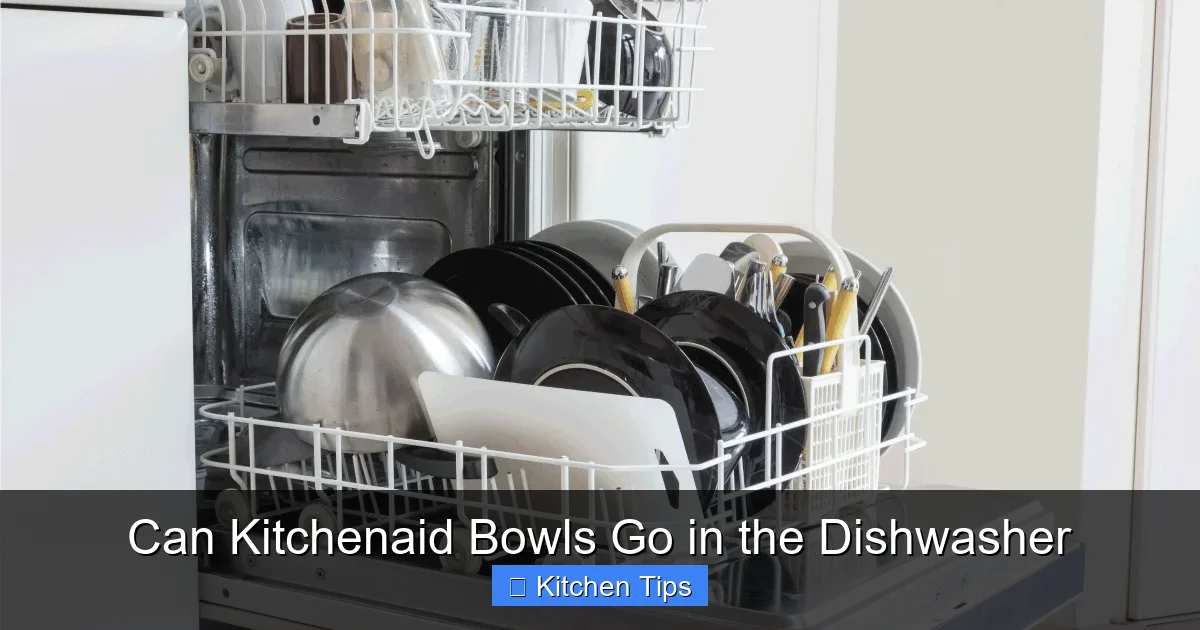
Visual guide about Can Kitchenaid Bowls Go in the Dishwasher
Image source: kitchenseer.com
Chemical Erosion and Pitting
High-alkaline detergents are common in dishwasher pods. These chemicals can react with certain metals, especially if they are left sitting in the damp, steamy environment of a closed dishwasher after the cycle finishes. This is what causes “pitting”—those tiny little grey dots that appear on the surface of stainless steel. If you notice these, it is a sign that your detergent is too harsh for your metal bowl.
Temperature Fluctuations
The heat cycle in a dishwasher is designed to sanitize, but it can be hard on materials that are not specifically engineered for extreme temperature swings. For bowls with coatings, such as the white-coated or colored metal bowls, excessive heat can lead to the coating peeling or flaking off. Once the coating is damaged, the bowl is no longer food-safe and must be replaced.
Expert Tips for Hand Washing Your Bowl
If you want to ensure your KitchenAid bowl lasts for decades, hand washing is the gold standard. It is not as difficult as it sounds, especially if you follow these simple professional tips.
The Soaking Method
If you have been making bread, the dough can be stubborn. Instead of scrubbing vigorously, fill the bowl with warm water and a drop of dish soap immediately after use. Let it sit for ten minutes. The water will soften the dried ingredients, allowing them to slide right off with a soft sponge or cloth. Avoid using steel wool or harsh scouring pads, as these will scratch the surface and create grooves where bacteria can hide.
Drying Techniques
Water spots are the enemy of a beautiful kitchen. After washing, dry your bowl thoroughly with a clean microfiber cloth. Leaving it to air dry can lead to mineral deposits, especially if you live in an area with “hard water.” By wiping it dry immediately, you maintain the luster of your stainless steel or the smoothness of your glass bowl.
When to Replace Your KitchenAid Bowl
Even with the best care, equipment eventually wears out. If you have been wondering can KitchenAid bowls go in the dishwasher and you realize you have been putting a non-safe bowl through cycles for months, check for these warning signs.
Cracks and Chipping
If you see a crack in a glass bowl, stop using it immediately. There is a risk of it shattering during the mixing process, which can introduce dangerous glass shards into your food. Ceramic bowls should be checked for chips along the rim; if the glaze is broken, bacteria can seep into the porous clay underneath.
Surface Corrosion
If your stainless steel bowl feels rough to the touch or shows signs of significant rust or deep grey pitting, it is time for an upgrade. These signs indicate that the protective oxide layer of the metal has been compromised. At this point, the bowl is difficult to clean properly and may affect the taste of your ingredients.
Maintaining Your Mixer’s Longevity
Your bowl is just one part of the system. The bowl-lift or tilt-head mechanism relies on the bowl being the correct size and weight. Using a damaged or warped bowl can actually cause the attachment (the whisk or dough hook) to hit the sides of the bowl. This creates metal shavings and puts unnecessary stress on the mixer motor.
Regular Maintenance
Keep the bowl-clamping area clean. If you are hand washing, make sure the bottom locking plate is dry before you attach it back onto the mixer. This prevents rust from forming on the base of your mixer itself. When the bowl fits snugly and securely, the mixer runs more efficiently and quietly.
Storage Advice
Store your bowls in a dry place. Stacking them is fine if they are stainless steel, but be careful with glass. If you must stack glass, place a soft cloth or a paper towel between them to prevent scratching. By protecting the finish, you ensure your equipment stays as functional as it is beautiful.
Conclusion
To answer the burning question: can KitchenAid bowls go in the dishwasher? Yes, but with conditions. While standard stainless steel can usually handle the machine, your ceramic, glass, and specialty-coated bowls will live much longer if you treat them to a quick hand wash. In 2026, we value our appliances more than ever, and a little extra care goes a long way in ensuring your baking tools remain the centerpiece of your kitchen. Remember to check the bottom of your specific bowl for the manufacturer’s mark, and when in doubt, choose the sink over the dishwasher to keep your baking equipment safe for years to come.
Frequently Asked Questions
Can all stainless steel KitchenAid bowls go in the dishwasher?
Most standard stainless steel bowls are dishwasher safe. However, check the base of your bowl for a stamp; if it is highly polished or has a decorative coating, it is safer to hand wash it to prevent surface damage.
What happens if I put a ceramic bowl in the dishwasher?
Putting a ceramic bowl in the dishwasher can lead to chipping or cracking due to the intense water pressure and movement. It is best to hand wash ceramic bowls to preserve their glaze and structural integrity.
How do I remove water spots from my stainless steel bowl?
You can remove water spots by wiping the bowl with a microfiber cloth dipped in a small amount of white vinegar. This neutralizes minerals and restores the shine to the metal surface.
Are the coated KitchenAid bowls dishwasher safe?
No, most coated metal bowls (like the white-coated ones) are not recommended for the dishwasher. The heat and harsh detergents can cause the coating to peel or flake off over time.
Can the glass bowl for my KitchenAid mixer go in the dishwasher?
While some glass bowls are labeled dishwasher safe, they are prone to micro-cracks from the vibrations of the machine. Hand washing is highly recommended to ensure the long-term safety and durability of the glass.
How often should I wash my mixer bowl?
You should wash your bowl after every single use to prevent food residue from building up. Even if you only used it for dry ingredients, a quick wipe down ensures that no oils or debris interfere with your next recipe.