
Choosing the right kitchenaid attachment for cake mix can make or break your baking project. Whether you are whipping up a box mix or a from-scratch recipe, knowing when to use the flat beater, wire whip, or pastry beater ensures your cakes turn out light, airy, and delicious.
Baking a cake is one of the most rewarding kitchen projects you can take on. There is nothing quite like the smell of a freshly baked treat warming up your home. But if you own a stand mixer, you might find yourself pausing at the very beginning of the recipe to ask a very important question: which kitchenaid attachment for cake mix should I actually use?
With so many metal and silicone pieces rattling around in your kitchen drawers, it is easy to grab the wrong one. Using the incorrect tool can lead to a dense, tough cake or a messy disaster on your countertop. Do not worry, because figuring this out is much easier than you think. Let us dive into everything you need to know about picking the right tool for your next baking adventure.
Key Takeaways
- The Flat Beater: This is your go-to kitchenaid attachment for cake mix, standard butter cakes, and general batters because it creams butter and sugar effortlessly.
- The Wire Whip: Use this attachment only for recipes that rely on whipped egg whites or heavy cream for their rise, such as sponge cakes or angel food cakes.
- The Flex Edge Beater: A variation of the flat beater, this tool features a silicone edge that scrapes the bowl for you, saving time and preventing unmixed pockets.
- Speed Matters: Always start your KitchenAid mixer on a low speed when adding dry ingredients to your cake mix to avoid a flour cloud in your kitchen.
- Avoid Overmixing: Overworking your cake batter develops gluten, resulting in a tough and chewy cake rather than a tender crumb.
- Scrape the Bowl: No matter which kitchenaid attachment for cake mix you choose, pausing to scrape the bottom and sides of the bowl is essential for even mixing.
Understanding Your KitchenAid Attachments
Before we talk about specific batters, let us take a quick look at the main players that came in your mixer box. Each attachment was designed for a specific job in the kitchen. Knowing their strengths will help you decide which kitchenaid attachment for cake mix is right for the specific dessert you want to bake today.
The Flat Beater
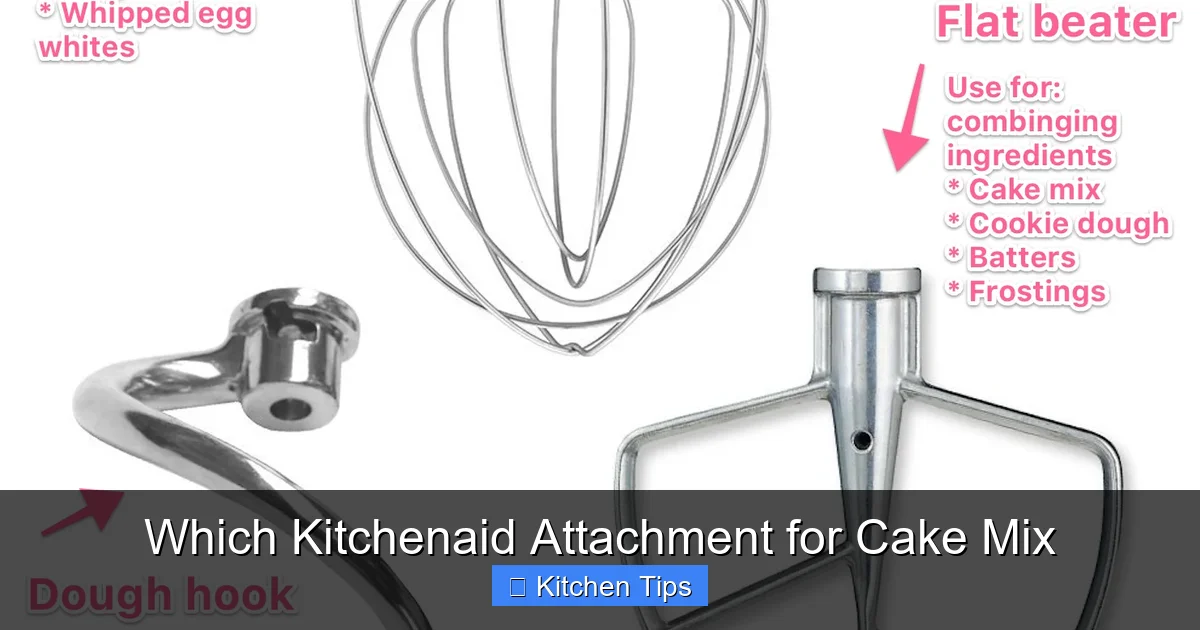
The flat beater, often shaped like the letter “Y” or a paddle, is the absolute workhorse of your stand mixer. If you are wondering which kitchenaid attachment for cake mix to grab for a standard box mix, pound cake, or yellow butter cake, this is almost always the correct answer. It is designed to beat, mix, and incorporate air into medium-to-heavy mixtures.
The flat beater does a fantastic job of creaming butter and sugar together, which is the secret foundation of a fluffy cake. It pushes the ingredients against the sides of the bowl while folding them back into the center. For ninety percent of the cakes you will bake, this is your best friend.
The Wire Whip
The wire whip looks like a giant balloon made of thin metal wires. It is designed to incorporate a maximum amount of air into light mixtures. You might be tempted to use this for your everyday box mix, but hold on just a minute. The wire whip is actually too delicate for thick cake batters.
Instead, save the wire whip for specialized cakes that need whipped egg whites or whole whipped eggs to rise. Think of angel food cakes, sponge cakes, or chiffon cakes. If you try to use the wire whip on a heavy butter cake batter, the thick mixture will bend and warp the delicate wires.
The Flex Edge Beater
The flex edge beater is a modern upgrade to the traditional flat beater. It features a flexible silicone strip along one or both sides of the paddle. As the beater spins around the bowl, that silicone edge acts like a rubber spatula, wiping the sides clean as it goes.
This is arguably the best kitchenaid attachment for cake mix if you hate stopping your mixer to scrape down the bowl. It ensures that pockets of flour or unmixed butter do not get trapped hiding against the glass or metal walls of your mixing bowl.
Matching Your Cake Type to the Right Attachment
Not all cakes are created equal. A rich chocolate fudge cake requires a different approach than a light-as-a-air Japanese cotton cheesecake. Let us break down which kitchenaid attachment for cake mix you should use based on the style of cake you are baking today.
Visual guide about Which Kitchenaid Attachment for Cake Mix
Image source: miro.medium.com
Box Mixes and Standard Butter Cakes
Box mixes are popular because they are fast, easy, and delicious. When you are tossing a box mix, water, oil, and eggs into your bowl, you want to use the standard flat beater or the flex edge beater.
Start your mixer on the lowest speed to incorporate the dry powder without sending a cloud of flour into the air. Once the ingredients are wet, bump it up to medium speed for about two minutes. The flat beater will whip just enough air into the batter to give you a nice, even rise in the oven.
Light and Airy Sponge Cakes
If your recipe tells you to whip whole eggs and sugar together until they triple in volume before gently folding in flour, you need the wire whip. This is the only kitchenaid attachment for cake mix that can incorporate enough air to make a true sponge cake rise properly.
Because there is usually no baking powder in a classic sponge cake, the mechanical action of the wire whip is entirely responsible for the cake’s height. Whip those eggs until they are pale and thick, then switch to a hand spatula to gently fold in your dry ingredients so you do not pop the air bubbles.
Dense and Rich Pound Cakes
Pound cakes are famous for their dense, buttery, and decadent crumb. Because these batters contain a high ratio of butter and sugar, they require the sturdy power of the traditional flat beater.
When making a pound cake, you will want to cream your butter and sugar on medium-high speed with the flat beater for a good three to five minutes. This step builds the air pockets that keep your pound cake from turning into a heavy brick. After that, add your eggs one at a time, letting the flat beater incorporate each one fully.
Pro Tips for Mixing Cake Batter in a Stand Mixer
Choosing the correct kitchenaid attachment for cake mix is only half the battle. How you use your mixer matters just as much. Follow these simple tips to ensure your homemade and boxed cakes turn out bakery-quality every single time.
Do Not Overmix
It is tempting to let your stand mixer run on high speed for five minutes while you clean the kitchen, but resist the urge. Once you add flour to your cake batter, gluten begins to form. Overmixing develops too much gluten, which turns your tender cake into a tough, chewy disaster.
As soon as you no longer see streaks of dry flour in your bowl, stop the mixer. If you are using a box mix, follow the box instructions for timing very closely. Usually, two minutes of medium speed is the absolute maximum you need.
Temperature Matters
Before you attach your paddle and turn on the power, make sure your ingredients are at room temperature. Cold butter will not cream properly with sugar, and cold eggs can cause your batter to curdle.
Take your butter, milk, and eggs out of the refrigerator at least thirty minutes before you start baking. Room-temperature ingredients trap air more efficiently when beaten, resulting in a lighter, better-textured cake.
Scrape the Bowl
Even if you are using the fancy flex edge beater, it is always a good idea to stop halfway through mixing and take a rubber spatula to the bottom of the bowl. Unmixed butter and flour love to hide right at the very bottom where the beater cannot quite reach them. A quick manual scrape guarantees uniform mixing.
Troubleshooting Common Cake Mixing Mistakes
Have you ever pulled a cake out of the oven only to find it was lopsided, dense, or dry? Often, the culprit is related to how the batter was mixed. Let us look at how your attachment choice might be impacting your final product.
Dense and Heavy Cakes
If your cake looks flat and feels heavy, you likely used the wrong attachment or under-mixed your butter and sugar. If you used the wire whip for a standard butter cake, it could not push enough air into the heavy fat. Stick to the flat beater and give your butter and sugar plenty of time to fluff up.
Tough and Rubbery Crumbs
On the flip side, if your cake is tough, you probably overmixed the batter after adding the flour. Remember to switch to a lower speed and turn off the machine the exact second your ingredients come together. Treat your cake batter gently, and it will reward you with a soft, melt-in-your-mouth texture.
Conclusion
At the end of the day, picking the right kitchenaid attachment for cake mix comes down to understanding the physics of your ingredients. For most standard cakes and box mixes, the flat beater or the flex edge beater is your absolute best choice. Save the wire whip exclusively for whipped egg-based creations like angel food and sponge cakes.
By pairing the correct attachment with proper mixing techniques, room-temperature ingredients, and a watchful eye on your mixing time, you will be baking restaurant-quality cakes right in your own kitchen. Now preheat that oven, grab your favorite mix, and get ready to bake something wonderful!
Frequently Asked Questions
Can I use the wire whip for a regular box cake mix?
No, it is best to avoid the wire whip for standard box mixes. The wire whip is too delicate and is designed only for whipping things like egg whites and heavy cream, while the flat beater is needed for standard cake batter.
What is the difference between the flat beater and the flex edge beater?
The standard flat beater is made entirely of metal or coated metal, whereas the flex edge beater features a silicone strip on the side. This silicone edge automatically scrapes the sides of the bowl as it mixes, saving you time.
Why is my cake dense even though I used the right attachment?
A dense cake is usually caused by expired baking powder, cold ingredients, or overmixing the batter after adding flour. Make sure your ingredients are at room temperature and stop mixing as soon as the flour disappears.
Can I use my KitchenAid mixer for a one-bowl cake recipe?
Yes, absolutely! Just attach your flat beater, start on low speed when combining dry and wet ingredients to prevent a mess, and then mix on medium speed until just incorporated.
How fast should my KitchenAid be set when mixing cake batter?
You should almost always start on a low speed (speed 1 or 2) when incorporating dry ingredients to prevent splashing. Once mixed, you can bump it up to medium speed (speed 4 or 6) for creaming or beating.
Do I really need to scrape the bowl if I have a tilt-head mixer?
Yes, manual scraping is still recommended. Even with a tilt-head mixer, small pockets of unmixed butter or flour often hide at the very bottom center of the bowl where the attachment cannot reach.