
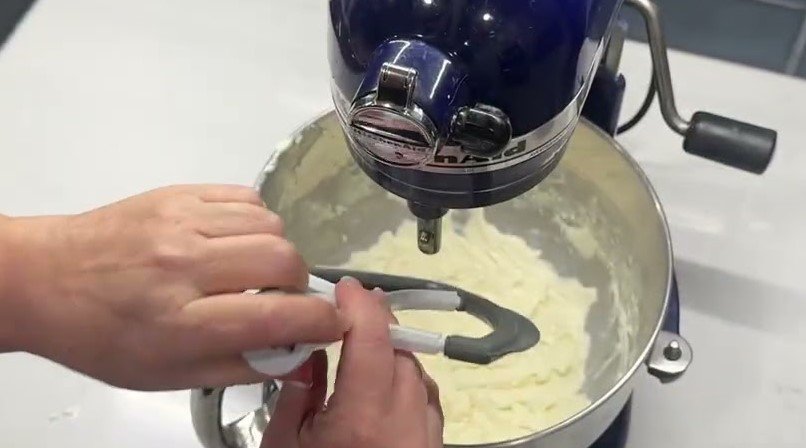
The paddle attachment for a KitchenAid mixer, officially known as the flat beater, is an essential tool designed for normal to heavy mixtures like cookies, cakes, and frostings. Shaped like a flat, angled paddle, it thoroughly blends ingredients without whipping excess air into the bowl. Knowing how and when to use your paddle attachment will instantly elevate your everyday baking results.
If you have ever unboxed a brand-new stand mixer, you likely found three mysterious metal pieces staring back at you. Among them, the most commonly used tool is undoubtedly the flat beater. But what is a paddle attachment for a KitchenAid mixer, and why do bakers rely on it so heavily?
Think of this trusty tool as the workhorse of your kitchen. While the wire whip gets all the glory for fluffy meringues and the dough hook handles tough pizza crusts, the paddle attachment quietly does the heavy lifting for your everyday baking. From a batch of chocolate chip cookies on a Tuesday night to a rich birthday cake on the weekend, this tool ensures your ingredients come together smoothly and evenly.
In this guide, we will explore everything you need to know about this versatile tool. You will learn what it is made of, what tasks it handles best, how it differs from other attachments, and how to keep it in top shape for years to come. Grab a cup of coffee, and let us dive into the wonderful world of stand mixer accessories.
Key Takeaways
- Definition: The paddle attachment for a KitchenAid mixer is the flat, coated metal or stainless steel beater used for standard mixing tasks.
- Primary Uses: It is ideal for mixing cookie dough, cake batters, quick breads, frostings, and mashing potatoes.
- Not for Whipping: Unlike the wire whip, the paddle does not incorporate large amounts of air, making it unsuitable for egg whites or heavy cream.
- Not for Kneading: It should not be used for heavy yeast doughs; that is the job of the dough hook.
- Material Options: Paddle attachments come in coated metal, stainless steel, and versions with flexible silicone edges (edge beaters).
- Easy Maintenance: Most standard paddle attachments are dishwasher safe, though hand washing helps preserve the finish.
Understanding the Paddle Attachment
To truly master your baking, you need to understand your equipment. The paddle attachment for a KitchenAid mixer gets its name from its distinctive shape. It features a flat, paddle-like design with open spaces that allow ingredients to flow through the center as the beater spins.
Design and Shape
The unique geometry of the paddle attachment is no accident. The outer edge is carefully contoured to match the curvature of your mixing bowl. As the shaft rotates on a planetary motion—meaning the beater spins in one direction while circling the bowl in the opposite direction—the paddle sweeps close to the sides and bottom.
This design ensures that flour, butter, and sugar do not get left behind. The flat surface provides enough resistance to cream butter and sugar together effectively, breaking down sugar crystals and incorporating tiny air pockets for a tender crumb in your baked goods.
Materials and Variations
Depending on which model of stand mixer you own, your paddle attachment for a KitchenAid mixer will typically come in one of a few materials:
- Coated Metal: The most common option, usually made of die-cast aluminum with a white or silver nylon powder coating. It is food-safe, durable, and dishwasher-safe.
- Stainless Steel: Found on higher-end models, solid stainless steel offers incredible durability and a sleek, professional look. It will never chip or flake.
- Flex Edge Beaters: An aftermarket or specialty accessory featuring a flexible silicone blade on one side. This acts as a built-in spatula, scraping the bowl as it mixes.
What the Paddle Attachment Does Best
You might wonder if you can just use the paddle attachment for everything. While it is remarkably versatile, it shines brightest during specific culinary tasks. Knowing when to use a paddle attachment for a KitchenAid mixer will save you time and prevent baking disasters.
Baking Cookies and Cakes
Cookie dough is where this attachment truly becomes your best friend. When you cream softened butter and sugar together, the paddle creates friction that beats air into the fat. This process is crucial for creating cookies that spread properly and have a great texture.
For cakes, the paddle effortlessly combines wet and dry ingredients without overworking the gluten in the flour. Whether you are making a pound cake, a yellow birthday cake, or a batch of brownies, this tool guarantees a uniform batter every single time.
Frostings and Fillings
If you love decorating treats, you will use this attachment constantly for frostings. Buttercream, cream cheese frosting, and royal icing all benefit from the steady mixing action of the flat beater. It whips enough air into the butter to make the frosting fluffy without turning it into an overly airy mousse.
You can also use it for savory fillings. Think of mixing up crab cakes, meatloaf, or mashed potatoes. The paddle breaks up lumps in potatoes quickly, giving you a smooth, creamy side dish with minimal effort.
When NOT to Use the Paddle Attachment
Using the wrong tool can damage your mixer or ruin your recipe. While the paddle attachment for a KitchenAid mixer is a multi-tasker, it does have clear boundaries.
Avoid Heavy Yeast Doughs
Do not be tempted to use your paddle attachment for bread dough, pizza dough, or cinnamon roll dough. Yeast doughs require heavy kneading to develop gluten strands. The paddle attachment is not strong enough to handle thick, elastic doughs, and doing so can strain or overheat your mixer motor. Always switch to the dough hook for these recipes.
Avoid Whipping Light Ingredients
If a recipe calls for whipping heavy cream into peaks or beating egg whites for a soufflé, leave the paddle in the drawer. The solid surface of the paddle simply pushes through these light ingredients rather than trapping air inside them. For whipping, you need the thin wires of the wire whip attachment, which rapidly incorporate air to double or triple your volume.
Tips for Getting the Best Results
Using your stand mixer correctly ensures your baked goods turn out delicious every time. Here are some simple, practical tips for using your paddle attachment like a pro.
The Importance of Ingredient Temperature
When using the paddle attachment to cream butter and sugar, temperature is everything. Your butter should always be softened to room temperature—cool to the touch, but able to take a thumbprint. If the butter is too cold, the paddle cannot break it down, leading to lumpy batter. If it is melted, the paddle will just splash it around without trapping air.
Scraping the Bowl
Even though the paddle attachment for a KitchenAid mixer gets very close to the edges of the bowl, it is never 100 percent perfect. Always stop your mixer midway through the process to scrape down the sides and bottom of the bowl with a rubber spatula. This ensures that unmixed butter or flour hiding at the bottom gets fully incorporated into your batter.
Adjusting the Beater-to-Bowl Clearance
If you notice that your paddle is missing ingredients at the bottom of the bowl, or conversely, if it is scraping against the metal, you may need to adjust the bowl clearance. KitchenAid mixers feature a small screw adjustment mechanism on the hinge pin. Turning this screw slightly raises or lowers the beater height so it sweeps the bowl perfectly without touching it.
Cleaning and Care Instructions
Taking care of your kitchen tools ensures they last for decades. Fortunately, maintaining a paddle attachment for a KitchenAid mixer is remarkably easy.
Hand Washing vs. Dishwasher Safety
Most standard coated metal paddles are officially dishwasher safe. However, many seasoned bakers recommend hand washing them in warm, soapy water. Over time, harsh dishwasher detergents and high heat can dull the finish of coated paddles or cause the coating to chip.
If you have a solid stainless steel paddle, it is completely dishwasher safe and resilient against rust, making cleanup even simpler. Regardless of the material, always wash your attachment promptly after use so that sticky sugar or dough does not dry and harden onto the surface.
When you finish baking, give your paddle a thorough rinse and dry it completely before storing it away. This simple habit keeps your attachment looking shiny and new for your next culinary adventure.
Conclusion
Understanding what a paddle attachment for a KitchenAid mixer is and how to use it unlocks a whole new world of baking possibilities. From creaming butter and sugar for Sunday morning cookies to whipping up creamy frostings for celebratory cakes, this humble flat beater is an indispensable kitchen companion.
By using it for the right tasks—like batters, doughs, and frostings—and keeping it clean, you will ensure your mixer performs at its absolute best for years to come. Now that you know the ins and outs of your flat beater, it is time to preheat your oven and get baking!
Frequently Asked Questions
Can I use the paddle attachment for whipping cream?
No, the paddle attachment is not designed to whip cream or egg whites. For whipping, you should use the wire whip attachment, which incorporates the necessary air to create fluffy peaks.
Is the KitchenAid paddle attachment dishwasher safe?
Most coated metal paddle attachments are dishwasher safe, but hand washing is recommended to preserve the finish and prevent chipping over time. Stainless steel paddles are completely dishwasher safe.
Can I make bread dough with the paddle attachment?
You should never use the paddle attachment for heavy yeast breads like pizza crust or loaf bread. That task requires the dough hook to properly knead and develop the gluten structure without straining your mixer.
Why does my paddle attachment hit the bottom of the bowl?
If your paddle strikes the bowl, the clearance needs adjustment. You can easily fix this by locating the adjustment screw on the mixer’s hinge and turning it slightly to raise the beater height.
What is a flex edge paddle attachment?
A flex edge paddle features a silicone strip along one side that acts like a spatula. It continuously scrapes the sides of the bowl as it mixes, saving you time and ensuring no ingredients are left behind.
Can I use a metal paddle in a glass mixing bowl?
Yes, standard metal paddle attachments are designed to be used safely with glass, ceramic, and stainless steel bowls. Just ensure your bowl is locked securely into place before starting the mixer.