
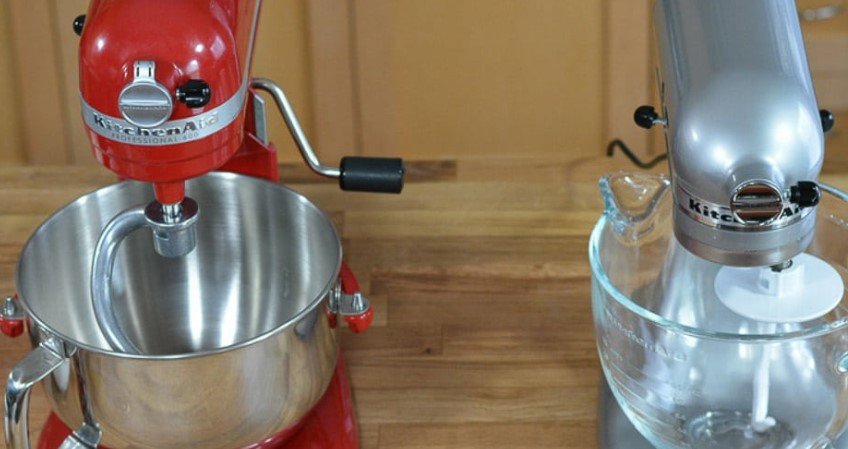
If you are wondering how many watts is a KitchenAid stand mixer, the answer typically ranges from 250 to 500 watts depending on the specific model. However, wattage is not the only factor that determines performance, as KitchenAid’s direct-drive motor design is engineered for efficiency and torque rather than just raw power consumption.
When you start your baking journey, buying a stand mixer is a huge milestone. It is the heart of any kitchen. If you have spent any time researching, you have likely found yourself asking: how many watts is a KitchenAid stand mixer? It feels like the most important number on the spec sheet. We see high numbers on blenders and food processors, so it makes sense to assume that more watts always mean a better machine. But with these mixers, the story is a bit more nuanced.
As we head into 2026, the technology behind these iconic machines remains as reliable as ever. Whether you are whipping up a batch of meringues or kneading thick sourdough bread, understanding the power behind your appliance helps you use it safely and effectively. Let us take a deep dive into what those numbers actually mean for your time in the kitchen.
Key Takeaways
- Wattage Varies: Most residential KitchenAid mixers fall between 250 and 500 watts, with professional models pushing the higher end.
- Torque Matters Most: It is better to focus on the mixing power and torque than just the total wattage number listed on the box.
- Direct-Drive Efficiency: KitchenAid uses a direct-drive transmission, which delivers more consistent power to the beaters without losing energy through belts.
- Bowl Size Dictates Power: Generally, mixers with larger bowl capacities come equipped with higher-wattage motors to handle heavier dough loads.
- Usage Defines Need: Casual bakers usually find the lower-wattage entry-level models more than enough for cookies and cakes.
- Wattage Isn’t Everything: A 325-watt KitchenAid mixer can often outperform a 600-watt generic brand mixer due to superior motor engineering.
The Truth About KitchenAid Wattage
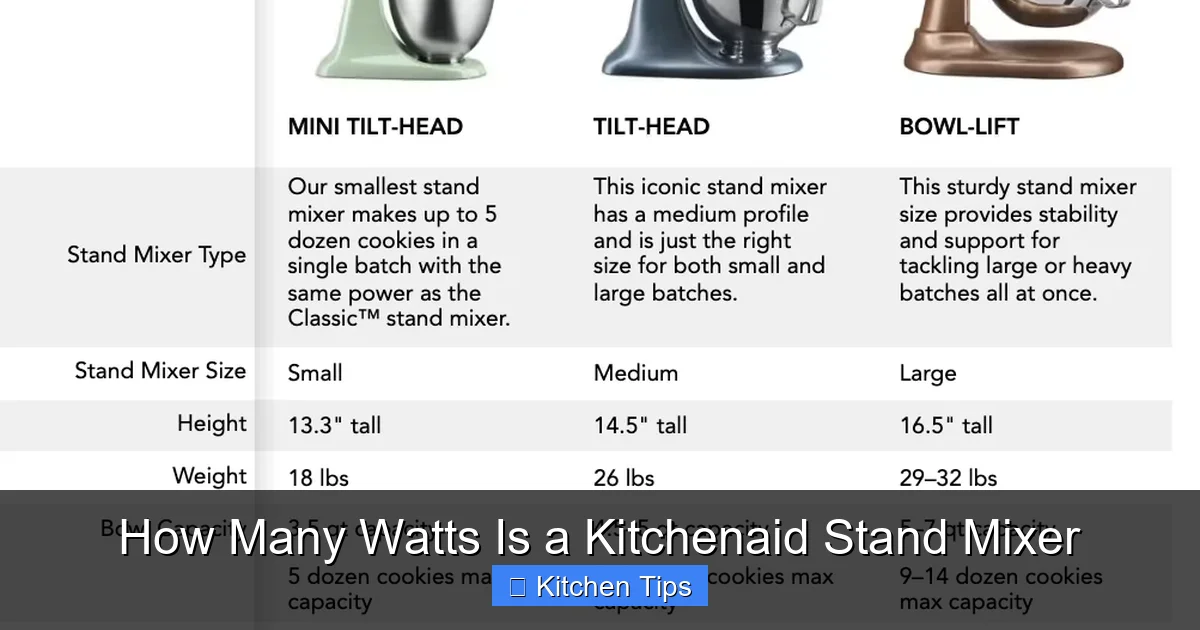
When people ask how many watts is a KitchenAid stand mixer, they are usually looking for a single number. The reality is that the wattage varies significantly across the product line. For the classic Tilt-Head models, you might see motors ranging from 250 to 325 watts. For the larger Bowl-Lift series, those numbers often climb up to 500 or even 600 watts.
It Is About Torque, Not Just Power
Think of it like a car engine. A heavy-duty truck has a different kind of power than a race car. KitchenAid motors are designed to provide high torque. This means that even at lower wattage, the machine is built to maintain a steady speed even when the dough gets heavy and sticky. If you have ever felt a cheaper mixer struggle or “bog down” when mixing cookie dough, that is a lack of torque. KitchenAid mixers avoid this by using metal gears that keep the beaters moving steadily, regardless of the resistance.
Direct-Drive Engineering
One reason KitchenAid does not need 1000-watt motors is their direct-drive transmission. Many budget mixers use a belt system. Belts can stretch or slip over time, which wastes energy. By connecting the motor directly to the head of the mixer, KitchenAid ensures that almost all the power produced is transferred directly into the bowl. This is why a 325-watt KitchenAid can often outperform a 500-watt mixer from a brand that uses a belt-driven system.
Choosing the Right Model for Your Needs
Now that we have answered how many watts is a KitchenAid stand mixer, you might wonder which one you actually need. Not every baker requires the biggest, most powerful motor available. If you mostly make cakes, brownies, and cookies, an entry-level Tilt-Head model will be your best friend. These are lighter, easier to store, and perfectly capable of handling standard baking tasks.
Visual guide about How Many Watts Is a Kitchenaid Stand Mixer
Image source: images.ctfassets.net
When to Upgrade to High Wattage
If you are a regular bread baker, you should look at the higher-wattage models. Bread dough is incredibly dense. When you knead dough for ten minutes, it puts a lot of stress on the motor. In 2026, the Bowl-Lift models with 500-watt motors remain the gold standard for home bread bakers. The extra power ensures that the motor stays cool and performs consistently, even under heavy loads.
Does Higher Wattage Mean More Noise?
Surprisingly, no. Many people assume a higher-wattage machine will be louder, but noise levels are usually more related to the gears and the metal housing. A well-maintained mixer, regardless of how many watts it uses, should produce a smooth, consistent hum. If your mixer starts making grinding or clicking sounds, it usually indicates a need for maintenance rather than a sign that it is “working too hard.”
Maintenance Tips for Your Mixer Motor
Even though these machines are built to last for decades, they need a little love. To keep your motor running efficiently, avoid overloading the mixer. Every manual comes with a “dough hook capacity” guide. If you try to mix more flour than the machine is rated for, you risk overheating the motor. Even if the mixer keeps spinning, the excess heat can damage the internal components over time.
The Importance of Speed Control
Another trick to protecting your motor is using the speed settings correctly. Never start the mixer on high speed. Always begin at the lowest setting and slowly increase it. This prevents the motor from experiencing a power surge. When you are done mixing, bring the speed back down to zero before you turn the machine off. Following these simple steps will help your mixer—regardless of how many watts it uses—live a long and happy life.
Wattage Myths Debunked
We live in a world where marketing tells us that “bigger is better.” This leads many shoppers to believe that a 600-watt mixer will automatically bake better bread than a 300-watt model. In reality, baking quality comes from the technique and the recipe. The mixer is just the tool that saves your arms from fatigue. Don’t let the wattage number be the only deciding factor in your purchase.
The Role of Efficiency
An efficient motor is much better than a powerful, inefficient one. KitchenAid has spent nearly a century perfecting the balance between power usage and mixing efficiency. When you buy one of these machines, you are buying a product that has been tested in thousands of home kitchens. The wattage provided is perfectly tuned to the size and design of the specific bowl you are using.
Why Wattage Isn’t Everything
When you look at the specs for a KitchenAid stand mixer, you should also consider the weight and the attachments. A sturdy, heavy metal base is actually more important than the wattage for stability. A lightweight plastic mixer might have a high-wattage motor, but if the machine “walks” across your counter while you knead dough, it is not a great experience. KitchenAid stands out because of the weight of the base, which holds the mixer steady regardless of the speed.
Focus on Versatility
Think about what else you want to do. KitchenAid mixers have a power hub that allows for attachments like pasta rollers, meat grinders, and vegetable spiralizers. In this case, the motor does need to be robust enough to handle the stress of these different attachments. If you plan on using these extras, leaning toward a model with slightly higher wattage is a smart investment.
Conclusion
Understanding how many watts is a KitchenAid stand mixer is a great start to becoming a more informed baker. While the range of 250 to 500 watts might seem low compared to other small appliances, it is precisely engineered for the tasks you need to perform. Remember that the magic lies in the direct-drive transmission and the torque, not just the number written on the box.
Whether you choose a compact model or a professional-grade workhorse, you are investing in a machine designed to stand the test of time. Keep your mixer clean, use the correct speeds, and respect the capacity limits, and it will be your most reliable kitchen companion for years to come. Happy baking!
Frequently Asked Questions
Does a higher wattage mixer bake better cookies?
Not necessarily. While higher wattage can handle thicker doughs more easily, the quality of your cookies depends on your recipe and technique rather than the motor power of your mixer.
Can I overheat my KitchenAid stand mixer?
Yes, if you consistently exceed the recommended dough capacity or run the mixer on high speed for too long, it can overheat. Always check your manual for specific load limits to keep the motor healthy.
Is 325 watts enough for a KitchenAid?
For most home bakers, 325 watts is plenty for cakes, frostings, and cookie doughs. It is a very capable motor that handles standard kitchen tasks with ease.
Why do some models have higher wattage than others?
Higher wattage models are generally paired with larger bowls and stronger gears to handle heavier, denser loads like large batches of bread dough. It is a matter of matching the power to the capacity of the bowl.
Are KitchenAid mixers energy-efficient?
Yes, because of their direct-drive motor system, they are quite efficient compared to belt-driven mixers. They transfer power directly to the attachments with minimal energy loss.
Does the age of my mixer affect its wattage?
Over time, the efficiency of any motor can drop, but a well-maintained KitchenAid mixer should perform consistently for decades. Regular maintenance and proper use are more important than the age of the machine.