
Identifying your KitchenAid mixer size is simple once you know where to look. By checking the serial number plate and measuring your bowl, you can easily determine which model you own to ensure you buy the correct attachments and accessories for your 2026 kitchen setup.
If you are like many home bakers, your KitchenAid stand mixer is the crown jewel of your kitchen counter. Whether you received it as a wedding gift years ago or scored a sleek model during a recent holiday sale, it is a workhorse that keeps on giving. However, as 2026 rolls on and you look to expand your culinary horizons with new pasta rollers, ice cream makers, or fresh paddle attachments, a common question arises: how to tell what size KitchenAid mixer I have?
It sounds simple, but with dozens of variations released over the decades, identifying your specific machine can feel a bit like a scavenger hunt. The good news is that you do not need to be a mechanical expert to solve this mystery. In this guide, we will walk through the foolproof methods to identify your mixer size and style so you can get back to baking your favorite treats with confidence.
Key Takeaways
- The Serial Number Plate: Always start by looking under the base or on the neck of your mixer to find the model and serial number.
- Bowl Capacity Matters: Measuring the liquid capacity of your mixing bowl is the fastest way to categorize your mixer into small, medium, or large.
- Tilt-Head vs. Bowl-Lift: Knowing your mixer style is essential, as tilt-head and bowl-lift mixers use different types of bowls and beaters.
- Use the Official Database: The KitchenAid website features a lookup tool that provides specific details based on your unique serial number.
- Match Your Attachments: Never force an attachment onto your mixer; if it doesn’t click into place easily, it likely isn’t the right size for your specific unit.
- Maintenance Timing: Knowing your exact model helps you order the correct replacement parts, such as beaters or splash guards, for long-term durability.
Locating the Model and Serial Number
The most accurate way to solve the puzzle of your mixer’s identity is to find the “birth certificate” of the machine. Every KitchenAid mixer comes with a unique identification plate. This plate contains the model number and serial number, which are the keys to unlocking all the specifications for your unit.
Where to Look on the Mixer
Depending on the age and style of your mixer, the location of this tag can vary. For most modern tilt-head models, you will find the tag on the underside of the base. You might need to flip the mixer on its side carefully—make sure it is unplugged first!—to read the small print.
For bowl-lift models, the plate is often located on the lower part of the machine, near the rear, or sometimes on the trim band just above the bowl-lift lever. If your mixer is quite old, the tag may have faded or fallen off, but don’t worry. There are other ways to narrow down the size, which we will discuss in the next section.
Using the KitchenAid Lookup Tool
Once you have the numbers, head over to the official KitchenAid support website. They have a search bar specifically designed for model lookups. By typing in your code, the site will generate a comprehensive profile of your mixer, including its bowl capacity, motor wattage, and the exact release year. This is the gold standard for identifying your machine without any guesswork.
Distinguishing Tilt-Head vs. Bowl-Lift
Before you even look at a label, you can tell a lot about your mixer by its architecture. There are two main families of KitchenAid mixers: the tilt-head and the bowl-lift. Knowing which family your mixer belongs to is the first step in knowing what size KitchenAid mixer I have.

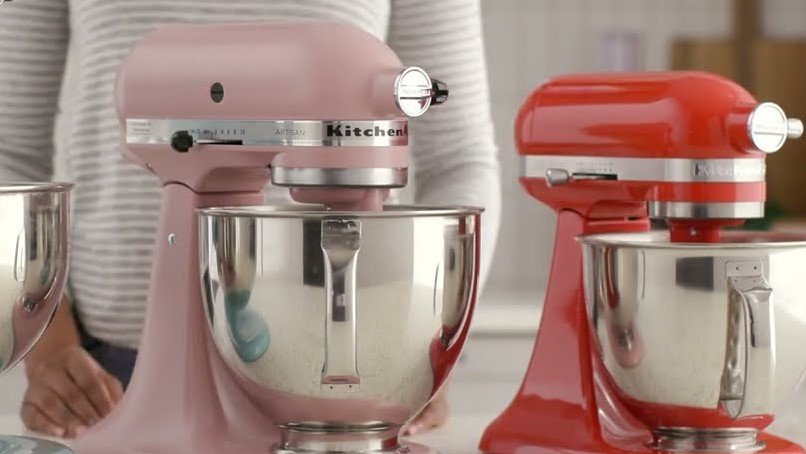
Visual guide about How to Tell What Size Kitchenaid Mixer I Have
Image source: i.pinimg.com
The Tilt-Head Design
The tilt-head model is the most iconic version. To add ingredients, you unlock the head and tilt it backward, exposing the beater shaft. These models are typically smaller to medium in size, usually ranging from 3.5 to 5 quarts. They are perfect for everyday home baking, like cookies, brownies, and standard cakes.
The Bowl-Lift Design
The bowl-lift model is heavier and sturdier. Instead of the head moving, the bowl sits on two arms and is raised and lowered via a side lever. These models are generally larger, starting at 5 quarts and going up to 7 or 8 quarts. If your mixer feels like a professional-grade machine meant for heavy bread doughs, you likely have a bowl-lift model.
Measuring Your Bowl Capacity
If you have lost your bowl or bought the mixer secondhand without one, you might need to determine the size based on the physical space available. While this is less precise than a model number, it is very effective for categorizing your machine.
The Water Displacement Method
If you have the original bowl, the easiest way to check its size is to fill it with water. Use a measuring cup to count exactly how many cups of water it takes to reach the brim. Keep in mind that a “5-quart” bowl actually holds 20 cups of water (since 4 cups equal 1 quart). If you pour in 20 cups and it hits the top, you officially have a 5-quart mixer.
Comparing Attachment Clearance
Another physical indicator is the diameter and depth of the bowl. Smaller bowls for tilt-head mixers are generally shallower and have a wider rim, while large professional bowls for bowl-lift mixers are deeper and more vertical. Comparing your bowl to photos online of 4.5-quart versus 6-quart bowls can often give you a visual confirmation of what you have.
Why Size Identification Is Vital
You might wonder why it matters so much if you have a 4.5-quart or a 5-quart mixer. While they are similar, the attachments for these machines are often not interchangeable. Forcing the wrong beater into your machine can cause significant damage to the planetary gear or the bowl itself.
Attachment Compatibility
Think of your mixer like a car. You wouldn’t put tires from a sedan on a truck, right? Similarly, mixing paddles and dough hooks are engineered for specific arc distances. Using a bowl that is too large or too small for your mixer’s height can result in ingredients not being incorporated correctly or the beater hitting the bottom of the bowl, scratching the surface.
Buying Replacement Parts
As we navigate 2026, parts for older machines are still widely available, but only if you know exactly what to order. Knowing your model number ensures that when you buy a new splash guard or a stainless-steel bowl, it will lock into place perfectly on the first try. It saves you the hassle of returns and gets you back to your recipes faster.
Common Misconceptions About Sizes
One of the most frequent mistakes people make is assuming that all “Standard” size mixers are the same. In reality, the KitchenAid lineup is vast. Some limited-edition colors or holiday bundles might have a slightly different internal configuration than the base model, even if they look identical from the outside.
Wattage vs. Capacity
A common myth is that higher wattage automatically means a larger bowl. This is not always true. Some compact mixers have powerful motors, while older, larger mixers might have lower-wattage engines. Always rely on the model number over the perceived “strength” of the motor when determining the size category.
The “Pro” Confusion
Many users assume that because they bought a machine branded “Professional,” it must be the largest size available. KitchenAid uses the “Professional” label for several different sizes, ranging from 5 to 7 quarts. Don’t rely on the name printed on the side; rely on the data printed on the plate under the base.
Maintaining Your Mixer for Years to Come
Now that you have successfully identified your mixer, it is time to treat it well. Regardless of the size, these machines are built to last for generations. Regular maintenance is the secret to keeping your mixer in top condition throughout 2026 and beyond.
Cleaning and Care Tips
Always wipe down the body of your mixer with a damp cloth after use. If you have a stainless-steel bowl, it is dishwasher safe, but many of the coated beaters should be hand-washed to prevent chipping. If you notice your mixer becoming noisy, it might be time for a simple re-greasing of the gears, which is much easier to research once you know your exact model number.
Conclusion
Determining your mixer size is a quick and rewarding task that empowers you to be a better baker. Whether you are upgrading your kitchen or just searching for the perfect replacement part, understanding how to tell what size KitchenAid mixer I have puts you in the driver’s seat. By using the serial number plate, checking your bowl capacity, and knowing your machine’s style, you ensure that your mixer will continue to be the heart of your kitchen for years to come. Happy baking!
Frequently Asked Questions
How can I tell if my mixer is a bowl-lift or tilt-head?
A tilt-head mixer features a hinge at the back, allowing the top to flip up to remove the bowl. A bowl-lift mixer has a solid head and uses a lever on the side to raise and lower the bowl into place.
What if my serial number has worn off?
You can still identify your mixer by measuring the bowl’s liquid capacity and comparing the physical design to images on the official KitchenAid website. Often, the color, knob placement, and bowl attachment style provide enough clues to narrow it down.
Are attachments for a 5-quart mixer compatible with a 6-quart one?
Generally, no. Attachments are designed for specific bowl curvatures and motor power outputs, so using the wrong size can damage your machine or lead to poor mixing results.
Is the bowl size printed on the mixer anywhere?
Unfortunately, the bowl capacity is rarely printed directly on the mixer’s body. The model number is your best source of information, which you can then cross-reference with the manufacturer’s official documentation.
Does a larger bowl mean the mixer is more powerful?
Not necessarily. While many large-capacity mixers have high-torque motors for bread dough, power is determined by the specific motor design rather than the bowl capacity alone.
Where can I find replacement parts once I know my size?
Once you have your model number, you can order authentic parts through the KitchenAid website or reputable appliance repair retailers. Using your specific model number ensures that every part you order will be a perfect fit.