
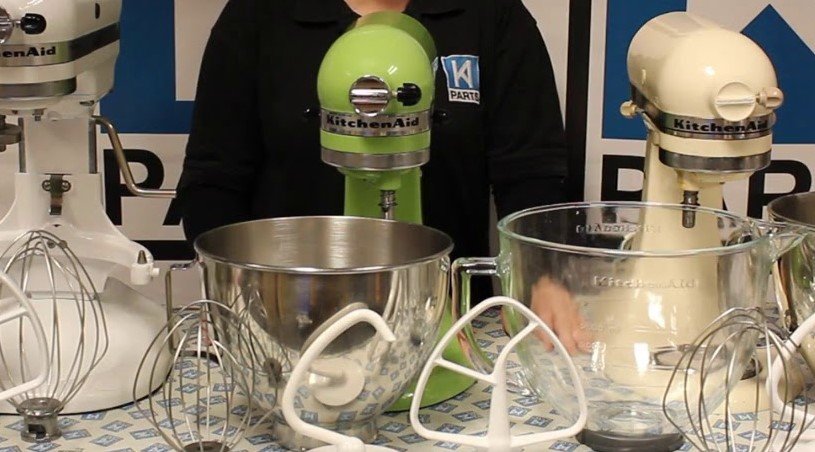
KitchenAid mixers typically range from 3.5 to 8 quarts, depending on the specific model and your needs. Choosing the right size is essential for ensuring your ingredients are mixed properly without overfilling the bowl. Whether you are a casual baker or a professional, understanding these capacities will help you pick the best machine for your kitchen.
If you have spent any time scrolling through baking blogs or browsing kitchen aisles in 2026, you have likely noticed that KitchenAid is the gold standard for stand mixers. But if you are ready to make the investment, one question always pops up: how many quarts is a KitchenAid mixer? It is not a one-size-fits-all answer, and that is actually a good thing. Having different bowl sizes means you can find the perfect tool for your specific culinary style, whether you are whipping up a single batch of cookies or kneading bread for a large family gathering.
Choosing a mixer can feel a bit overwhelming at first because there are so many options. Do you really need that massive 8-quart beast, or will a nimble 3.5-quart mini mixer do the job? In this guide, we are going to look at the different sizes available today and help you decide which one will live on your countertop. By the end of this, you will know exactly what to look for when shopping for your new favorite kitchen companion.
Key Takeaways
- Size Variety: KitchenAid offers a wide range of mixers, spanning from compact 3.5-quart models to heavy-duty 8-quart professional versions.
- Recipe Scaling: Understanding your bowl capacity helps you determine how much dough or batter you can make in a single batch.
- The Right Fit: Smaller bowls are ideal for quick tasks and small kitchens, while larger bowls are better for bulk baking and heavy bread doughs.
- Bowl Compatibility: Not all bowls are interchangeable between models, so always check the specific compatibility for your mixer head type.
- Practical Usage: Never fill your mixer past its maximum recommended capacity to prevent motor strain and messy spills.
Understanding the Range of Sizes
KitchenAid organizes its mixers by the volume of the mixing bowl, measured in quarts. In the current 2026 lineup, you will find models ranging from the compact 3.5-quart “Mini” series all the way up to the robust 8-quart commercial-grade mixers. The “quarts” refer to the capacity of the bowl, but it also hints at the power of the motor attached to it. A larger bowl usually implies a more powerful motor capable of handling heavier loads.
The Mini Series (3.5 Quarts)
The 3.5-quart mixer is a game changer for people with small kitchens or apartments. If you are worried about counter space, this is your best friend. It is lightweight, easy to move, and perfect for small batches. You can easily make a dozen cupcakes or a standard loaf of bread without any issues. It does everything the bigger mixers do, just on a smaller scale.
The Classic and Artisan Series (4.5 to 5 Quarts)
These are the iconic mixers you see in almost every home kitchen. The 4.5-quart and 5-quart sizes are considered the “Goldilocks” zone for most home bakers. They are big enough to handle double batches of cookies or a large cake, but they are not so heavy that you cannot move them when you need to clean behind them. If you host holidays or bake for birthdays, this size is the industry standard for a reason.
Choosing Based on Your Baking Habits
How many quarts is a KitchenAid mixer you should buy? It really depends on what you plan to make. A person who only bakes once a month for a school bake sale has different needs than someone who makes sourdough bread from scratch every single weekend. When you think about your needs, consider the volume of your favorite recipes.
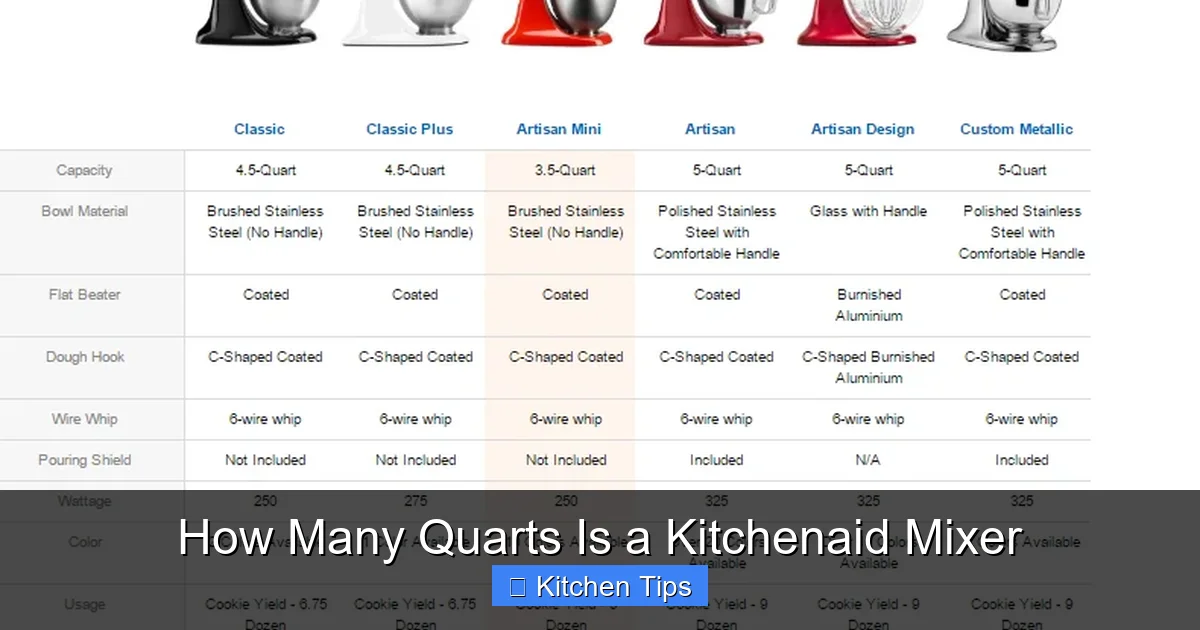
Visual guide about How Many Quarts Is a Kitchenaid Mixer
Image source: i0.wp.com
Small-Scale Baking
If your baking usually involves a box mix or a small batch of brownies, do not overspend on a massive unit. The 3.5-quart mini is perfect here. It saves you money and shelf space while delivering the same high-quality mixing action. You will find it is much easier to scrape down the sides of a smaller bowl, too, which means less waste.
The Enthusiastic Home Baker
If you love experimenting with breads, heavy cookie doughs, and layer cakes, you will want at least a 5-quart model. These mixers provide enough room to add ingredients like chocolate chips or nuts without the bowl overflowing. The extra capacity also gives your ingredients room to breathe, resulting in better aeration for your meringues and whipped cream.
The Power-to-Capacity Relationship
When asking how many quarts is a KitchenAid mixer, you also need to think about the motor power behind those quarts. It is not just about holding ingredients; it is about mixing them effectively. A larger bowl requires a stronger motor to turn the beaters through thick, cold dough. This is why the 7-quart and 8-quart models are often marketed toward professional use.
Why Bowl Lift Matters
In the larger 6, 7, and 8-quart models, you will usually find a “bowl-lift” design rather than the “tilt-head” design. With bowl-lift models, the head stays stationary while a lever raises the bowl to the beaters. This design is much more stable when working with heavy doughs. If you are a big bread maker, skip the tilt-head 4.5-quart and jump straight to a bowl-lift 6 or 7-quart model. You will notice the difference immediately when the mixer stays steady during a heavy knead.
Managing Overload
Regardless of how many quarts your KitchenAid mixer holds, you should never fill it to the very brim. Even an 8-quart mixer has a limit to how much heavy dough it can process safely. If you pack the bowl too full, you risk straining the motor or causing the machine to “walk” across your counter. Always leave a little room for the ingredients to move around.
Pro-Tips for Maintaining Your Mixer
Once you have chosen your mixer size, the goal is to keep it running for years. KitchenAid mixers are legendary for their longevity, often lasting for decades. A big part of that longevity is how you treat the bowl and the attachment set. Whether you have a 3.5-quart or an 8-quart unit, the maintenance steps are generally the same.
Regular Cleaning
Most stainless steel bowls are dishwasher safe, but many people prefer hand-washing them. Hand-washing prevents the finish from dulling over time. For the mixer head, simply wipe it down with a damp cloth. Never submerge the mixer base in water, as this will damage the internal electrical components.
Check Your Attachments
Always ensure your attachments are compatible with your specific quart size. Using a 5-quart dough hook on an 8-quart mixer won’t work, and it could damage the shaft. Most retailers categorize parts by the mixer model, so keep your model number handy. If you are upgrading your bowl size, check if you need new attachments to match.
Common Myths About Bowl Sizes
There is a lot of talk online about “bigger is always better” when it comes to mixers. However, that is not entirely true. If you buy an 8-quart mixer but you are only making a tiny batch of whipped cream, the whisk might not reach the bottom effectively. You end up with un-whipped liquid at the very base.
Small Batches in Large Bowls
To fix this issue in larger mixers, many people buy a smaller, compatible bowl for their larger unit. You can often find a 5-quart bowl that fits onto a 6 or 7-quart stand, giving you the best of both worlds. This is a pro-tip for anyone who wants a powerful machine but occasionally needs to do light work.
Weight and Portability
Remember that a larger quart size equals a heavier machine. If you plan on storing your mixer in a pantry and pulling it out only when needed, a 5-quart model is usually the maximum weight most people want to lift. Anything larger, like the 7 or 8-quart versions, is designed to live on the counter permanently.
Final Thoughts on Choosing Your Size
So, how many quarts is a KitchenAid mixer you should ultimately choose? It comes down to your personal workflow. If you value space and speed, go with the 3.5 or 4.5-quart models. If you are a serious baker who dreams of sourdough, double-layer cakes, and large batches of cookies, lean toward the 6, 7, or 8-quart models. Your mixer is an investment in your kitchen, and choosing the right size ensures that it remains your favorite tool for years to come.
No matter which size you pick, you are joining a community of home cooks who swear by the reliability of these machines. Take your time, assess how much you really bake, and select the one that feels like it belongs in your kitchen. Happy mixing!
Frequently Asked Questions
Can I put my mixer bowl in the dishwasher?
Yes, most standard stainless steel KitchenAid bowls are dishwasher safe. However, checking your specific manual is always a good idea to ensure your finish stays shiny.
Will a 5-quart bowl fit on a 6-quart mixer?
Not always, as it depends on the design of the mixer head and the attachment mounting system. You should check the official KitchenAid compatibility chart for your specific model number.
Do I need a bigger mixer for bread dough?
For heavy bread doughs, a larger 6 to 8-quart bowl-lift model is significantly better than smaller tilt-head models. The sturdier build handles the resistance of the dough much better without moving around.
What is the most popular size for home bakers?
The 5-quart Artisan series is widely considered the most popular size for the average home baker. It provides enough capacity for most standard recipes while remaining compact enough for most countertops.
Can I use a 3.5-quart mixer for everything?
The 3.5-quart mini is capable of handling most standard recipes, but it will struggle with very large batches or high-density doughs. It is best suited for small, everyday tasks rather than bulk baking.
How do I know if I am overfilling my bowl?
If ingredients are splashing over the sides or the motor sounds like it is struggling or slowing down, you have likely exceeded the capacity. It is better to split the ingredients into two batches to protect your mixer motor.